Every few years a headline announces that a piece of cardboard sold for millions, and a new wave of “card investors” arrives. So are trading cards actually a good investment in 2026? The honest answer: a tiny fraction are spectacular, most are not, and the difference comes down to discipline. Here is a clear-eyed look.
The case for
High-end, graded, iconic cards have genuinely outperformed many traditional assets over the last decade. They are tangible, scarce, globally recognized, and — unlike a stock — you can enjoy owning them. For the very top of the market, cards have behaved like blue-chip collectibles: fine art for a wider audience.
The case against
- Most cards don’t appreciate — The vast majority of cards track inflation at best. The record-breakers are the exception, not the rule.
- It’s illiquid — Selling a valuable card well takes grading, fees, and the right auction or buyer. It is not a button you press.
- Condition is brutal — Grades make or break value, and grading is partly subjective. A bump in the mail can erase thousands.
- Hype cycles — Markets ran hot in 2020–2021 and cooled after. Buying the top is a real risk.
The one rule
Collect what you love first, invest second. If a card is meaningful to you — a player you idolized, a game you adore, a historical figure who fascinates you — then even a flat market still paid you in enjoyment. The collectors who lose money are the ones chasing cards they feel nothing about.
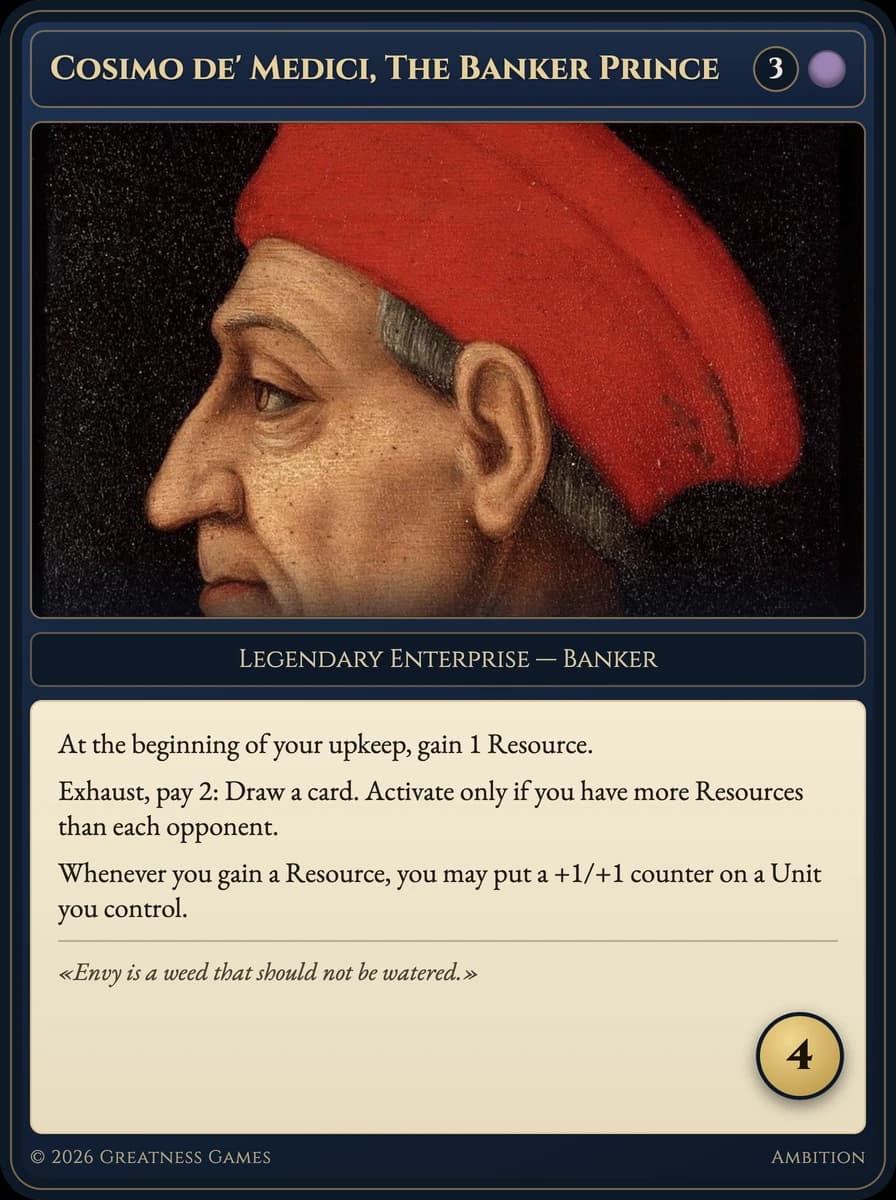
That is also the healthiest way into a new set. Infinite Ambition is free to play and collect right now, so you can fall in love with the cards — the legends, the art, the decks — before anyone asks you to think about resale value at all.
Start your collection
Infinite Ambition’s first set is a curated hall of history’s greatest figures — emperors, inventors, conquerors and visionaries — rendered as premium cards you can own and play for free. Browse the full set, then build a deck and take it online.
EXPLORE THE COLLECTION